Technology Adoption
DI in Industry (DIiI)
Motivation
Our future success is directly proportional to our ability to understand, adoption and integrate new technology into our work Sukant Ratnakar, management consultant and author
Introduction
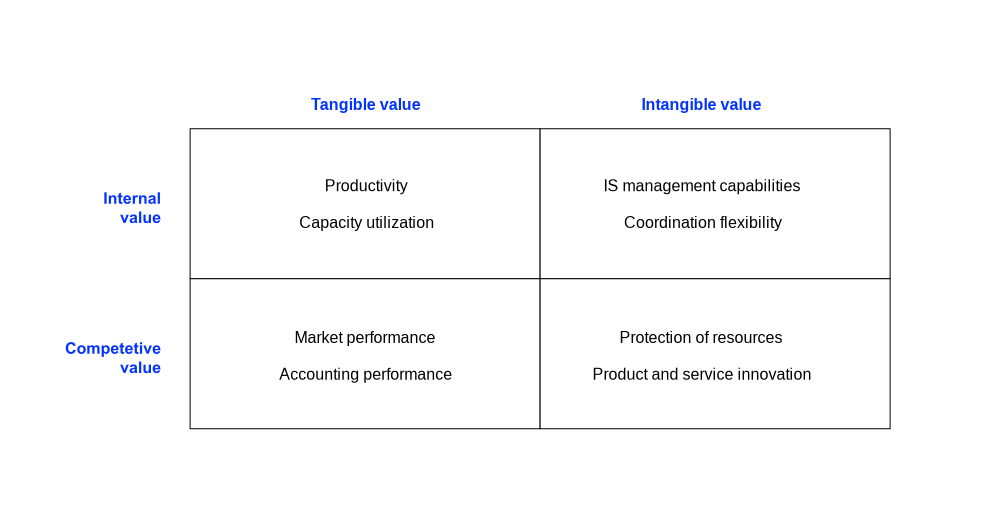
IS business value
Value created by IT is—in a business context—usually referred to as IT/IS business value.
IS business value is the impact of investments in particular IS assets on the multidimensional performance and capabilities of economic entities at various levels, complemented by the ultimate meaning of performance in the economic environment. Schryen (2013, p. 141)
The ultimate meaning of performance refers to what is subsequently derived if the outcome is exploited, e.g.
- impact on performance of a workflow management system: faster business processes
- the ultimate meaning: is dependent on the use of gained time and the extent to which competitors have speeded up their processes
Taxonomy of IS business value
Usage as the missing link
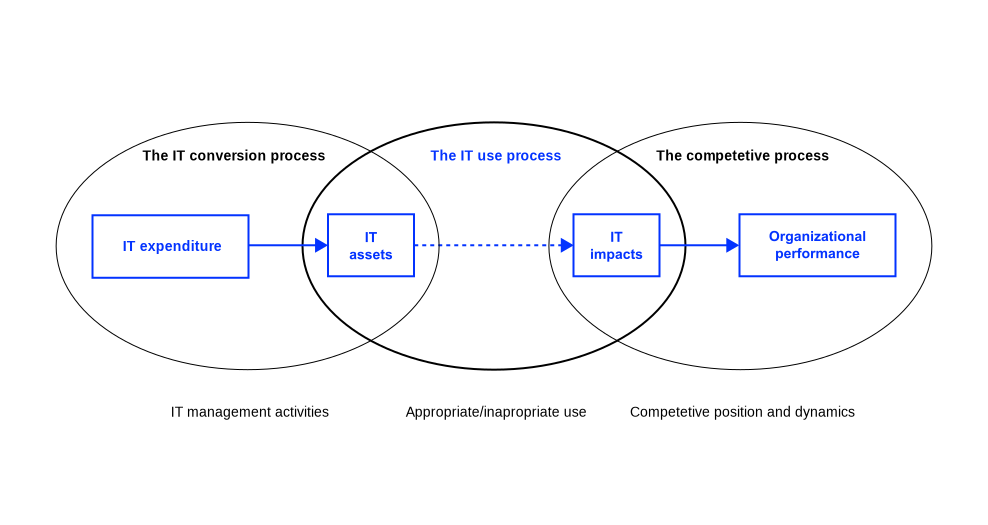
IT assets need to be used in order to create any impact that, eventually, creates value.
Adoption and use
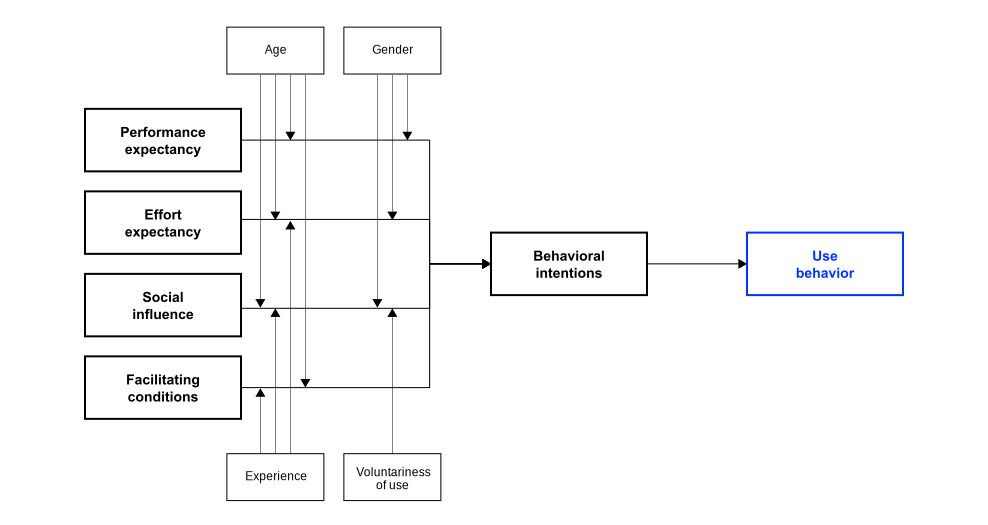
The Unified Theory of Acceptance and Use of Technology (UTAUT) suggests that the actual use of technology is determined by behavioural intention. The perceived likelihood of adopting the technology is dependent on the direct effect of four key constructs, namely performance expectancy, effort expectancy, social influence, and facilitating conditions. The effect of predictors is moderated by age, gender, experience and voluntariness of use
Efective use
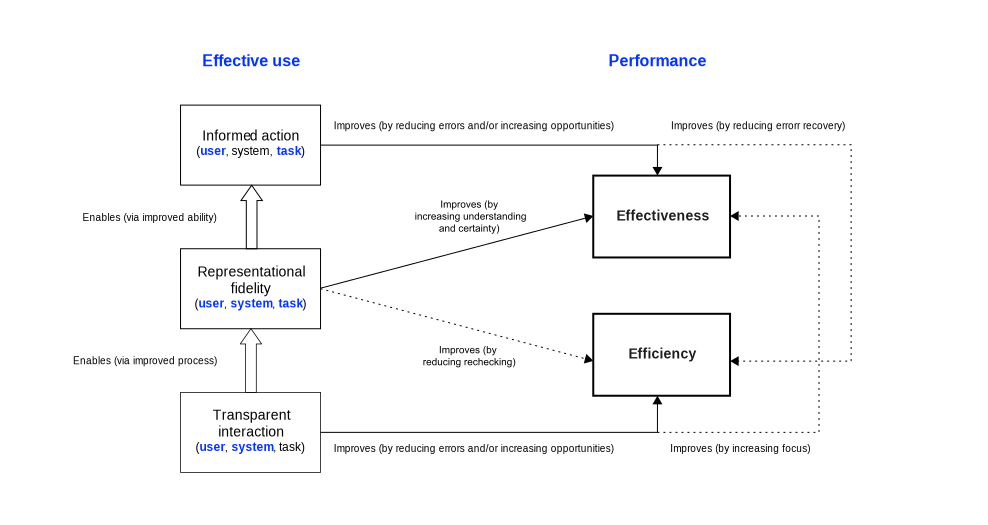
Key for Figure 4: Solid arrows reflect primary paths; dashed arrows reflect secondary paths; boxed arrows reflect necessary causality (i.e., x enables but does not determine y ). Bolding on “user,” “system” and “task” reflect the relative emphasis on each element of use (bold reflects more emphasis).
The Theory of Effective Use defines effective use as “using a system in a way that helps attain the goals of using the system” (Burton-Jones & Grange, 2013, p. 636) and conceptualizes it to consist of three dimensions: transparent interaction, representational fidelity, and informed action.
Transparent interaction is the extent to which a user is accessing the system’s representations unimpeded by its surface and physical structures.
Representational fidelity is the extent to which a user is obtaining representations from the system that faithfully reflect the domain being represented.
Informed action is the extent to which a user acts upon the faithful representations he or she obtains from the system to improve his or her state.