Resource-based Advantages
Strategy and Performance Management
Neu-Ulm University of Applied Sciences
August 18, 2026
Agenda
- Reflection & objectives 10 min
- Internal audit & key resources 10 min
- Culture as resource 20 min
- Break 15 min
- RBV & VRIO 50 min
- Mini case: TSMC 15 min
- Dynamic capabilities 15 min
- SWOT framework 25 min
- Wrap-up & Q&A 10 min
Reflection
Before we start: Any questions or comments regarding the competition and positioning concepts discussed last week?
Learning Objectives
After this section, you should have a solid understanding of
- the nature and purpose of an internal audit in formulating strategies;
- major internal factors that impact competitive advantage;
- the role of organizational culture as a resource that is difficult to imitate;
- the tenets of the resource-based view and dynamic capabilities;
- the construction and application of the Strengths-Weaknesses-Opportunities-Threats (SWOT) matrix;
- how internal resources create sustainable competitive advantage.
Internal Perspective
Internal Audit
Assessing a firm’s strengths and weaknesses so that strategies can be formulated that capitalize on internal strengths and overcome weaknesses.
Key Resources
Key internal areas/resources an internal assessment should focus on:
Tangible resources, intangible resources, organizational capabilities, competitive assets, knowledge management, strategic flexibility, technology as well as culture & values.
Culture as Resource
Culture eats strategy for breakfast. Widely attributed to Peter Drucker; no documented source exists
Culture is the eighth category of the internal audit. Shared assumptions, norms, and behaviors are socially complex and costly to imitate, which makes culture a candidate for sustained competitive advantage.
Resource-Based View
Reading Takeaways
Form small groups of 3–4 students and discuss what you have learned about the Resource-Based View (RBV) from reading Peteraf (1993) and clarify issues of understanding. Focus on following questions:
- How can the RBV’s key tenets be summarized
(i.e., main concepts, definitions, and underlying logic). - What are key implications for strategic management?
15:00
Key Assumptions
The RBV contends that internal resources are critical for achieving and sustaining competitive advantage, even more important than the environment.
VRIO Framework
To create sustained competitive advantage, resources must be valuable, rare, inimitable/non-substitutable, and organizationally supported (Barney, 1995).
Limits to Competition
Peteraf (1993) identifies ex-ante and ex-post limits to competition that are crucial for sustaining competitive advantage.
Culture Through VRIO
Culture is the standard example of a socially complex resource:
Valuable: guides behavior where no process applies
Rare: assumptions form through specific shared history
Inimitable: competitors copy artifacts, not assumptions
Organized: sustained by hiring, reward, and promotion
Discussion
Your firm’s culture is an internal resource. Competitors can copy artifacts and stated values within months, but the underlying assumptions form over years of shared experience.
Which specific, actionable measures
reach the level of underlying assumptions?
10:00
Mini Case: TSMC
TSMC manufactures chips it does not design. Morris Chang launched the pure-play foundry model in 1987: the company builds other firms’ designs and never competes with its own customers. That model made fabless companies such as NVIDIA, Qualcomm, and Apple possible.
TSMC holds 72.5% of contract chip manufacturing. Samsung, SMIC, GlobalFoundries, and Intel each hold at most around 6%. Competitors buy the same EUV lithography machines from ASML at EUR 200 to 350 million per unit, and their yields on leading-edge nodes remain lower 1.
Your task:
- Identify 3-4 key resources or capabilities of TSMC, analyze each using the VRIO framework
- What protected TSMC before competitors reached leading-edge manufacturing? (ex-ante limits)
- What prevents competitors from catching up now? (ex-post limits)
- Which of these resources are cultural or organizational rather than physical?
15:00
Dynamic Capabilities
Overview
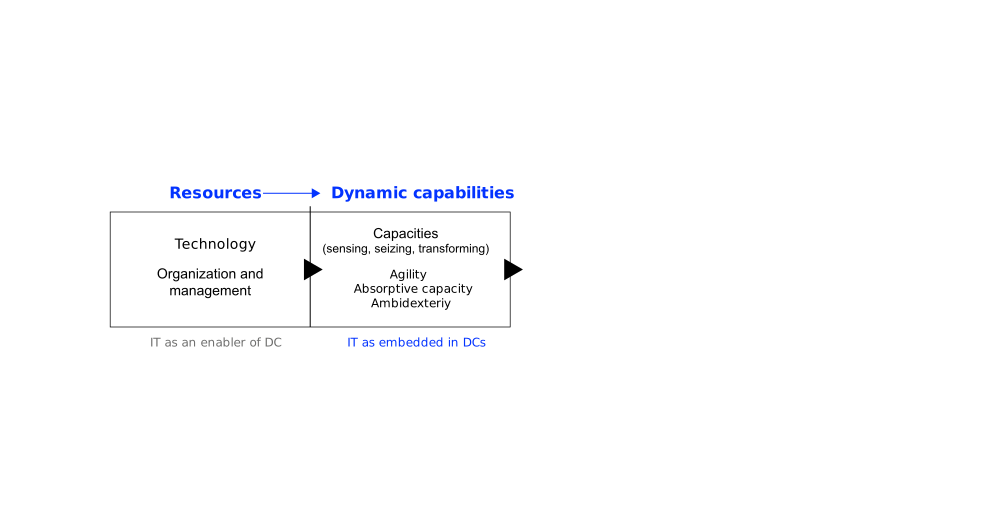
Dynamic capabilities refer to a firm’s ability to integrate, build, and reconfigure internal and external resources to address rapidly changing environments (Teece et al., 1997).
Core Elements
Sensing,
(identifying and assessing opportunities)
seizing,
(mobilizing your resources to capture value from those opportunities)
and transforming
(continuously renewing the organization)
Example: Apple Inc.
Apple provides a compelling illustration of dynamic capabilities in action through sensing, seizing, and transforming.
Apple’s success can be attributed in part to its dynamic capabilities, allowing the company to sense changes in the market, seize opportunities like the smartphone revolution, and reconfigure its resources and capabilities to maintain a competitive edge.
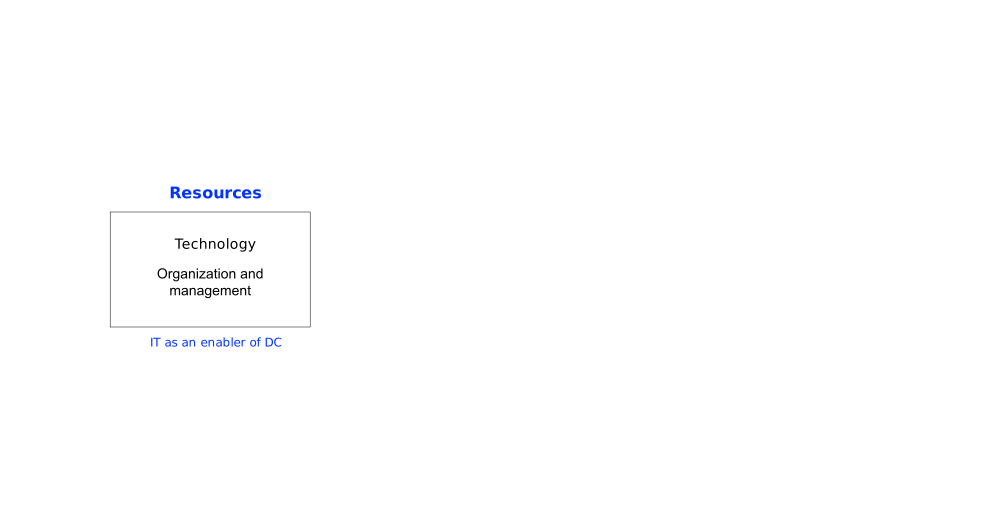
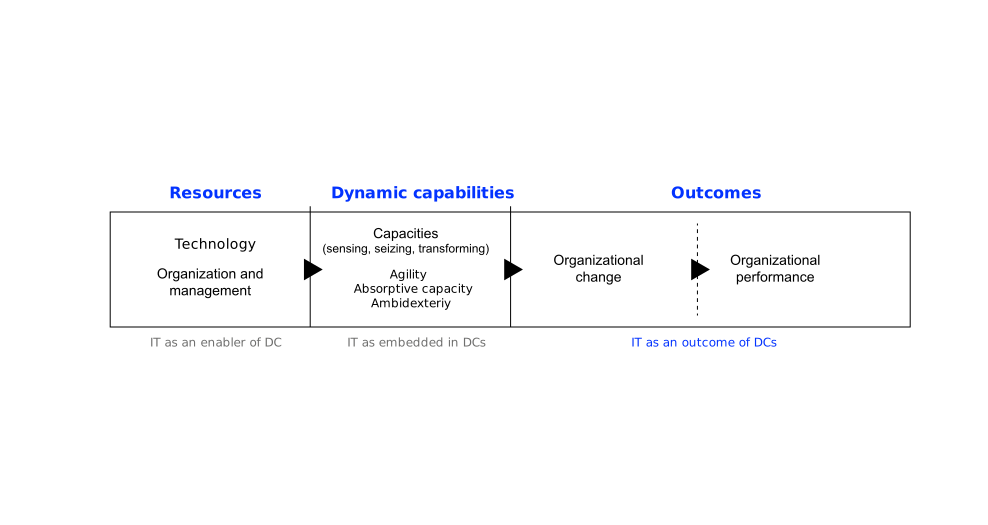
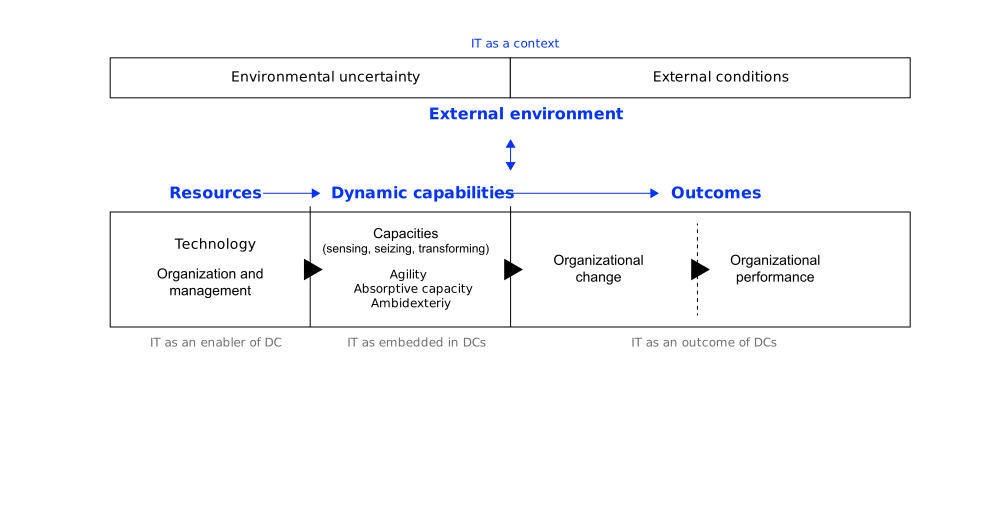
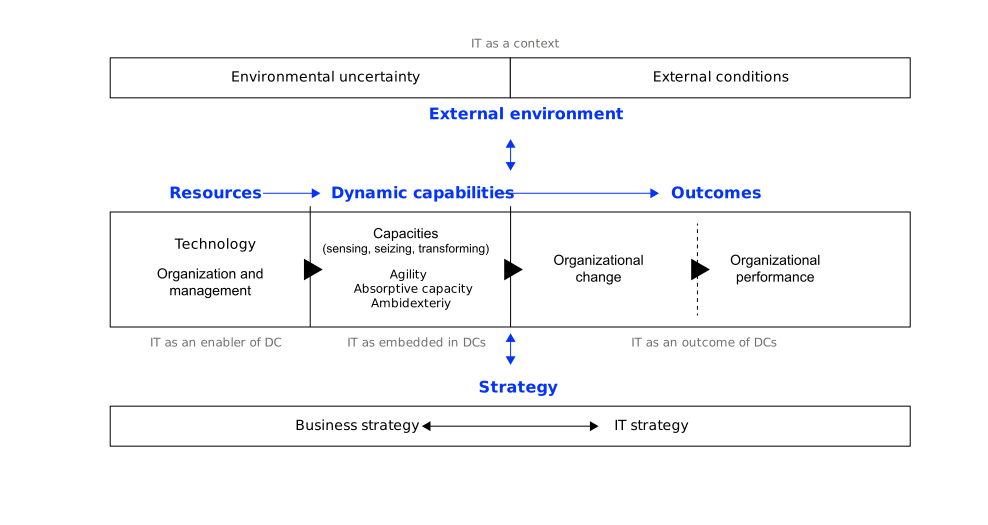
Excursus: Dynamic Capabilities and IS
SWOT Framework
Overview
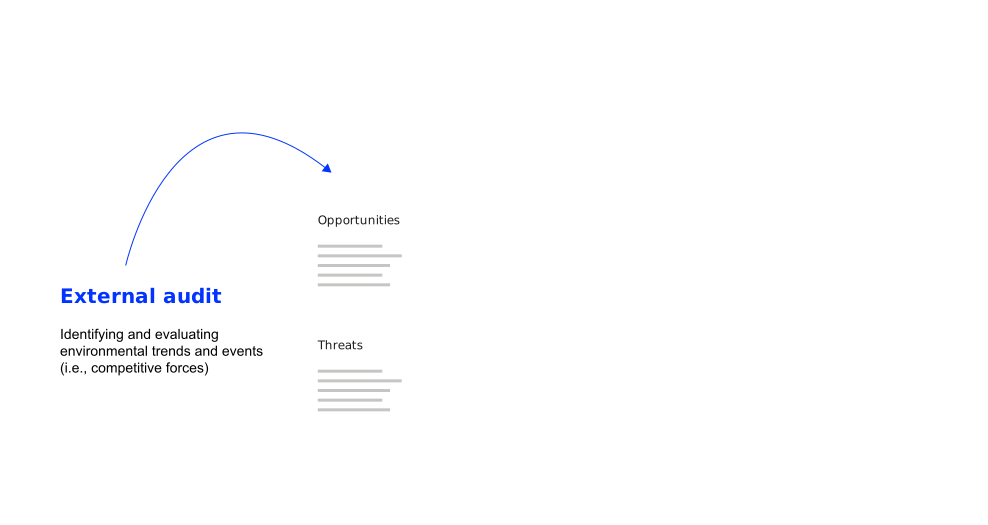
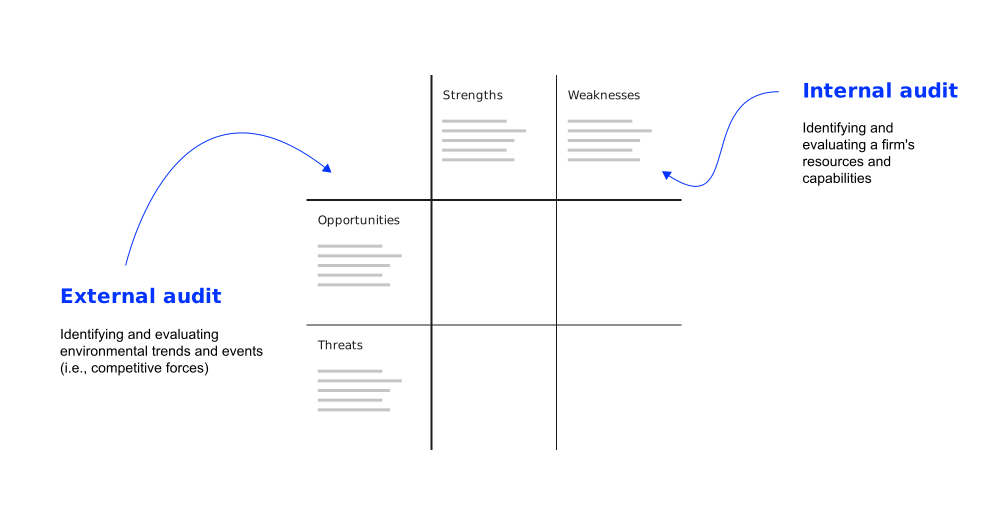
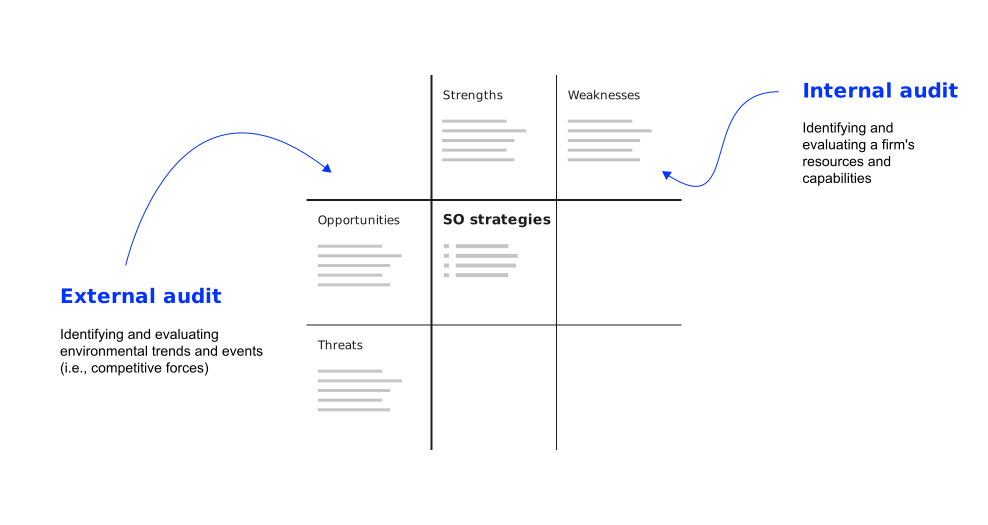
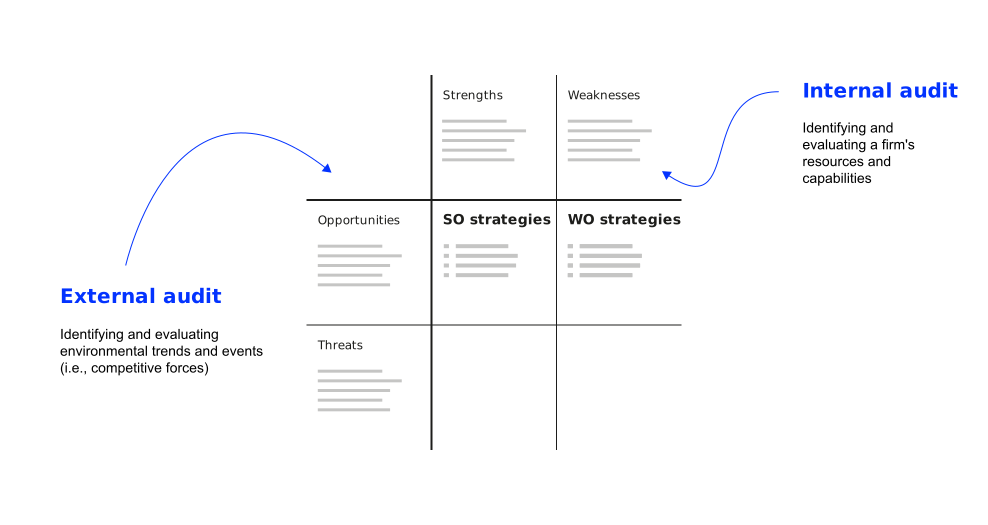
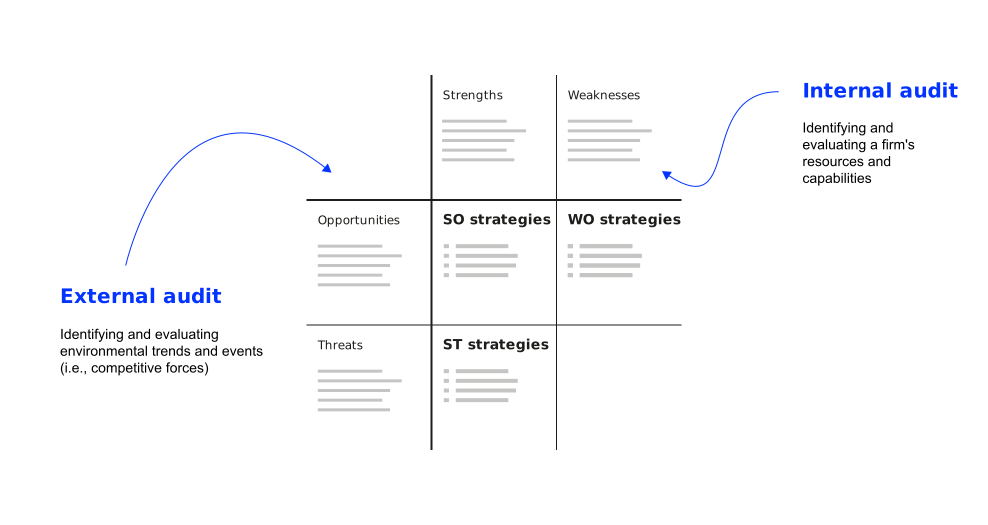
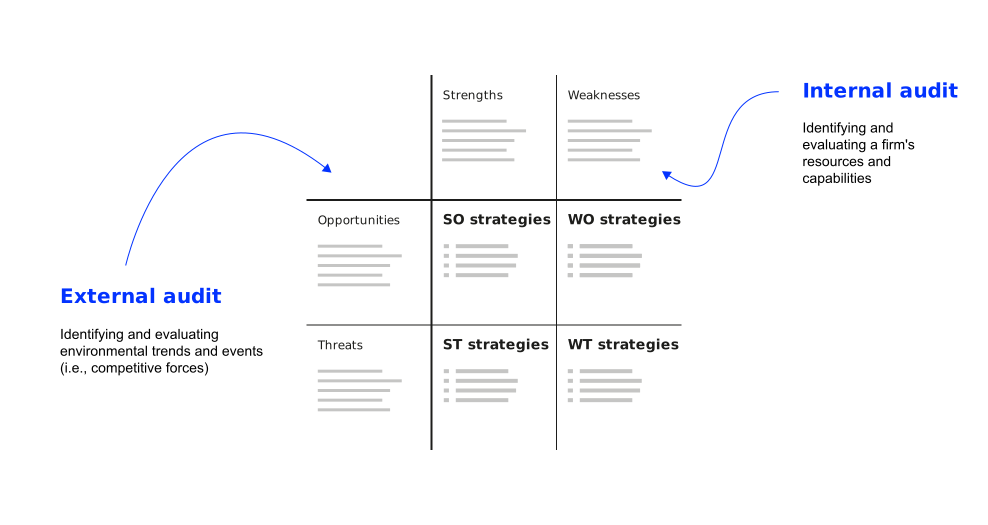
The Strengths-Weaknesses-Opportunities-Threats (SWOT) framework integrates internal and external analysis to develop four types of strategies.
SWOT Matrix Structure
Process for SWOT Development
Steps in using the SWOT framework:
- Perform an external audit to identify opportunities and threats
- Perform an internal audit to identify strengths and weaknesses
- Allocate internal and external factors in the matrix
- Review whether allocation to (one) box is correct
- Structure the points in each box (i.e. group under headline, structure in sub-levels)
- Review potential relevance (and disregard as appropriate)
- Test whether statement is true and quantify where possible
- Review, prioritize
- Develop strategies based on the analysis
Exercise
Building on the Five Forces analysis of the GenAI industry, now analyze ONE company’s strategic position using SWOT analysis.
Select ONE company: OpenAI, Anthropic, Meta, Google (DeepMind), or Mistral
- Identify 3-4 key strengths (internal) that give your company competitive advantage
- Identify 3-4 key weaknesses (internal) or limitations your company faces
- Select 3-4 opportunities (external) in the environment that you could exploit (see Five Forces)
- Select 3-4 threats (external) that could harm your company (see Five Forces)
- Discuss which strategic combination (SO, WO, ST, WT) is most critical for your company
- Propose a specific strategic action for your chosen combination.
15:00
Key Takeaways
- Internal audit focuses on identifying strengths and weaknesses across functional business areas
- Organizational culture is socially complex and persistent, which makes it both a source of inimitability and a constraint on strategy execution
- Resource-based view emphasizes that internal resources are more critical than environment for competitive advantage
- VRIO framework provides systematic approach to evaluating resources for sustainable competitive advantage
- Dynamic capabilities enable firms to sense, seize, and transform in rapidly changing environments
- SWOT analysis provides comprehensive framework integrating internal and external factors
- IT plays multiple roles in dynamic capabilities as enabler, embedded component, outcome, and context
- Limits to competition both ex-ante and ex-post are necessary for sustaining competitive advantages
Review and Consolidation
The following questions are designed to review and consolidate what you have learned and are a good starting point for preparing for the exam.
- Do you agree or disagree with the resource-based view (RBV) theorists that internal resources are more important for a firm than external factors in achieving and sustaining competitive advantage? Explain your and their position.
- What makes a resource valuable to a company? Give specific examples.
- Explain the concept of resource heterogeneity. Why is it considered a crucial factor in determining competitive advantage according to the RBV?
- How does resource immobility relate to the sustainability of competitive advantage?
- Explain why organizational culture can qualify as a VRIO resource. Which of Schein’s three levels is hardest for a competitor to imitate, and why?
- Describe a strategy that failed because it conflicted with the prevailing culture. Which underlying assumptions blocked it, and what would changing them have cost?
- Mintzberg describes strategy as perspective, a collective intuition shared by members of an organization. Compare that account of culture with treating culture as an auditable internal resource.
- How do dynamic capabilities enable firms to adapt and innovate over time?
- What is the relationship between a firm’s resources, competitive advantage, and value creation for customers?
- How does the RBV contribute to our understanding of why some firms consistently outperform others in the marketplace?
- Give examples for the different ways IT/IS relates to dynamic capabilities.
- Listen to the decoder episode featuring Josh Miller, the cofounder and CEO of The Browser Company, and subsequently create a SWOT matrix based on the insights provided in the interview.
- Why do you think the SWOT Matrix is the most widely used of all strategy matrices?
- What other strategy matrices do you know? Name and explain one and compare it to the SWOT matrix.
- Think of limitations of the SWOT matrix and related analysis. Name three limitations and relate them to the concept of dynamic capabilities.
- Perform a SWOT analysis for Spotify [Netflix, OpenAI, NVidia …].
Homework
Read Mintzberg (1978) and make notes on following questions:
- Why and how does Mintzberg challenge the prevailing view of strategic planning as the primary approach to strategy formation?
- How does Mintzberg propose to think of strategy formation instead?
- Which patterns of strategy formation has Mintzberg identified?
- Choose a real organization and identify which pattern(s) it follows. What evidence supports your assessment?
- What practical implications can you draw from Mintzberg’s insights for strategic management practices?
- How has this reading changed your thinking about strategy?
Reading tip: Create a concept map while reading to visualize the relationships between different patterns and concepts.
Do some casual research on Netflix’s strategic journey.
Q&A
Literature
Footnotes
Case facts from Warum diese Chipfirma niemand nachbauen kann by Jan-Keno Janssen, c’t/heise online, 25.09.2026 (in German).